
 Svenska
Exercise and movement are fun. I have participated in a few races over the years, and it is primarily the joy of experience that drives me. People gather under festive conditions with the same interest. The goal is to move forward with great focus and determination. My reward system is stimulated, and I get a feeling of well-being. The brain reward system is stimulated by exercise. Interestingly, drugs such as nicotine and alcohol can also stimulate the brain reward system where dopamine is a common denominator.
At the time I was studying the reward systems, I read about results from a research group in Stockholm at the Karolinska Institute (Brené et al). Exercise is not only rewarding but also has an antidepressant effect: Running is rewarding and antidepressive. Moreover, exercise and movement have measurable effects on cardiovascular health. Parameters such as blood pressure, blood sugar, blood fat profile, and reduced inflammation levels are improved. What really supports this is a dose-response correlation. The more we move, the greater the health effects. Please see: https://www.aftonbladet.se/a/W0zJ8d. From a pharmacological perspective, a dose-response can appear differently, with a linear or, for example, a biphasic relationship. I need to find the exact reference to find out the shape of this correlation.
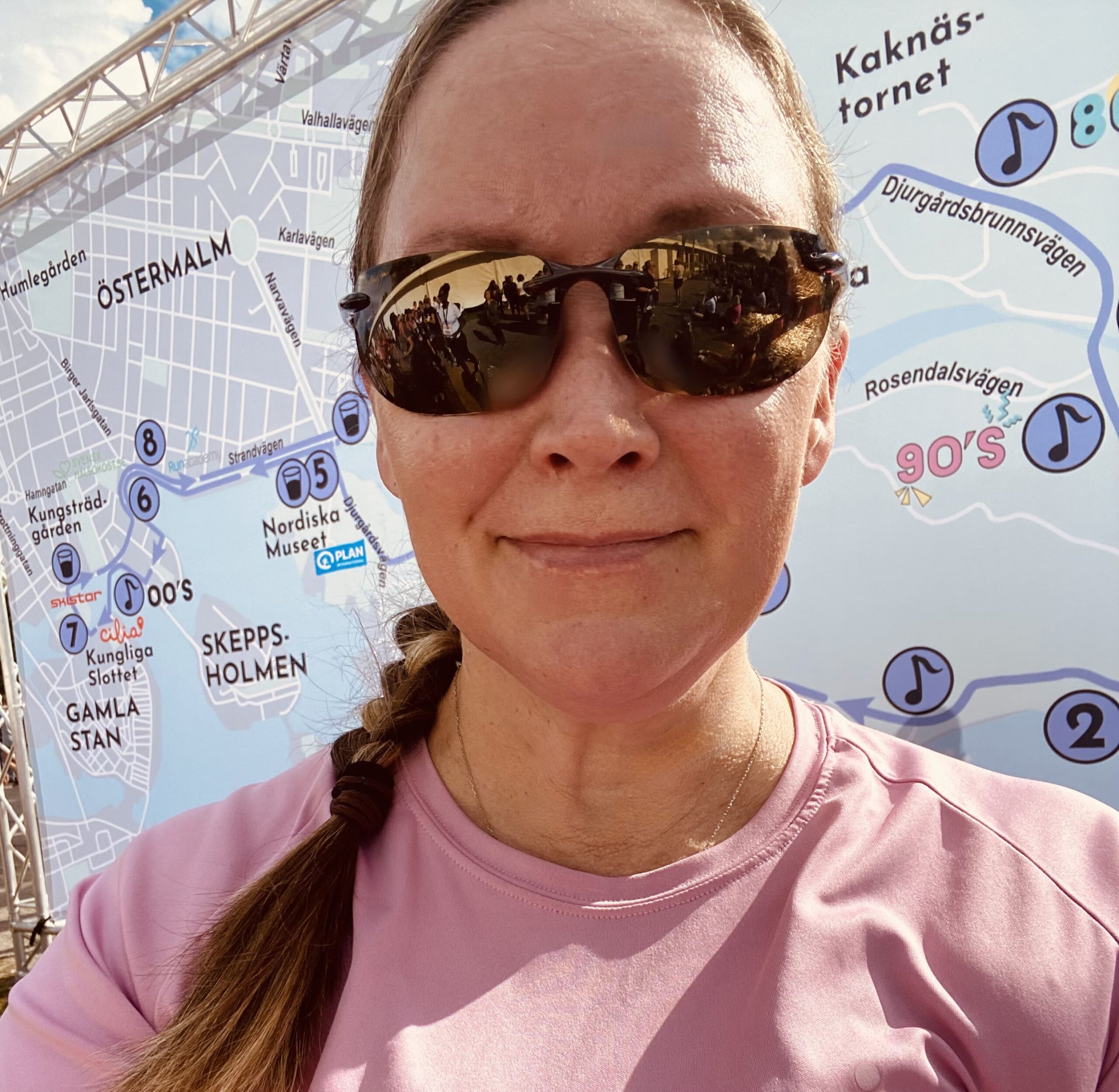
Today is the check-in for the 2025 Ladies’ 10 km run. It is good to be registered for a race because it makes me go jogging a little extra. This will be my fifth Ladies’ running. I am happy to have started jogging again, and I expect to continue even in autumn and winter since exercise is perishable. There are many pointers when it comes to diet and training, but the most important thing for me is that it provides well-being and happiness!