

 Svenska
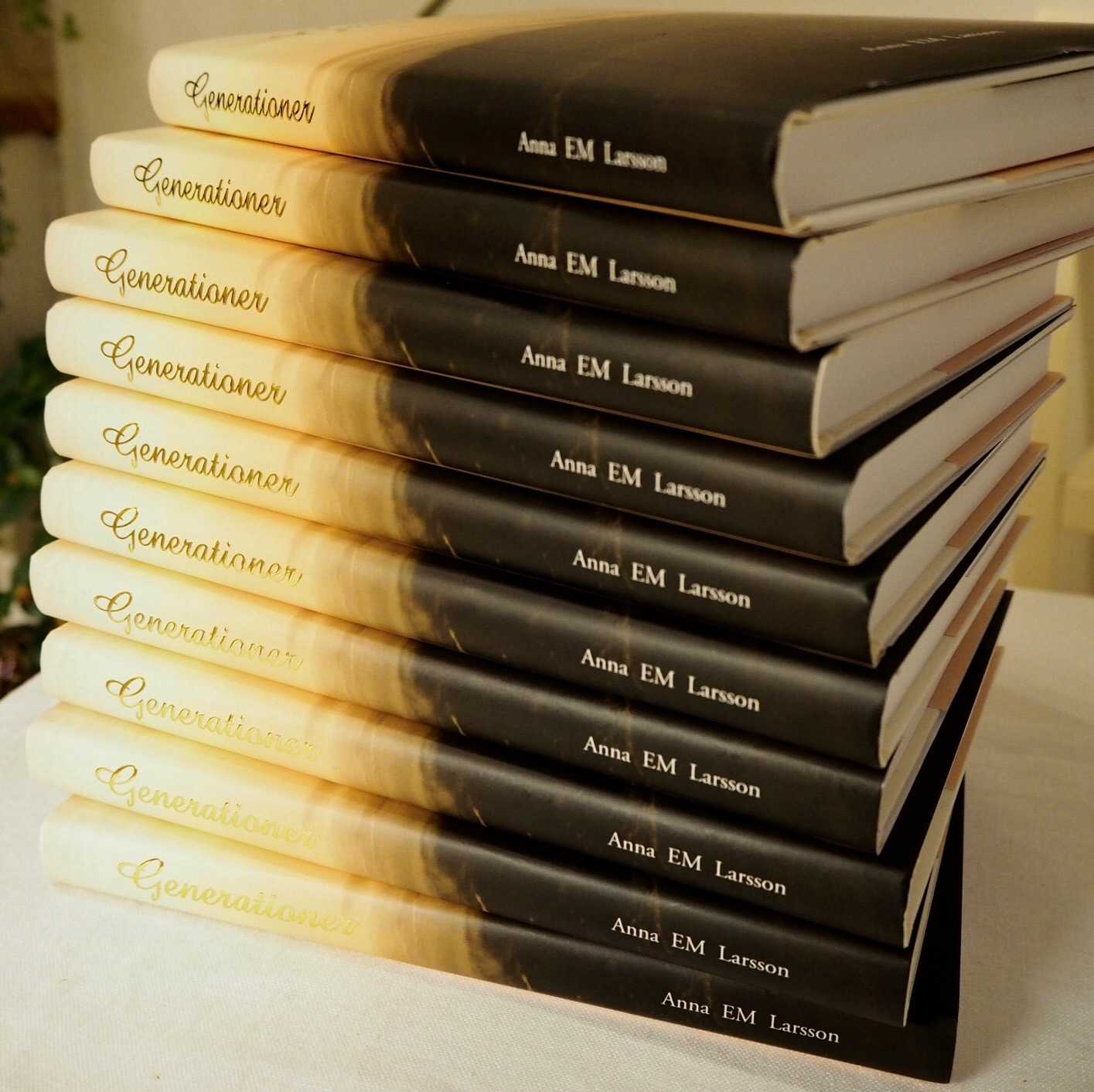
Finally, life has in a way settled. I am talking about my writing. I have needed time to refocus. Recharge my batteries. Today I started to think about my next book. I like the characters in the book so much, and I will continue to write about them. This is my hobby, and of course I talk about my writing with friends and colleagues. Since my characters are very kind and lovable persons, I was suggested to have a mean character in my next book. A good idea. But difficult and challenging.
One of the world’s most famous speeches is from Martin Luther King Jr. I have a dream. At that time, in Washington 1963, he shared his vision for a just America. About work and freedom.
“I have a dream that one day even the state of Mississippi, a state sweltering with the heat of injustice, sweltering with the heat of oppression, will be transformed into an oasis of freedom and justice.”
It is always good to have dreams. My dream and goal is to continue to write. To work for internet freedom. There are a lot of countries in the world where it is not evident to write freely. So, I am very happy to live in Sweden. Here we have freedom of speech.
I like to work at the pharmacy and write in my spare time. Sometimes it happens that customers in the pharmacy say that they are in the library by mistake. Pharmacy (apotek) and library (bibliotek) are rather similar words in Swedish. However, books are a very nice topic to talk about. Everybody has a book to recommend. A universal interest.

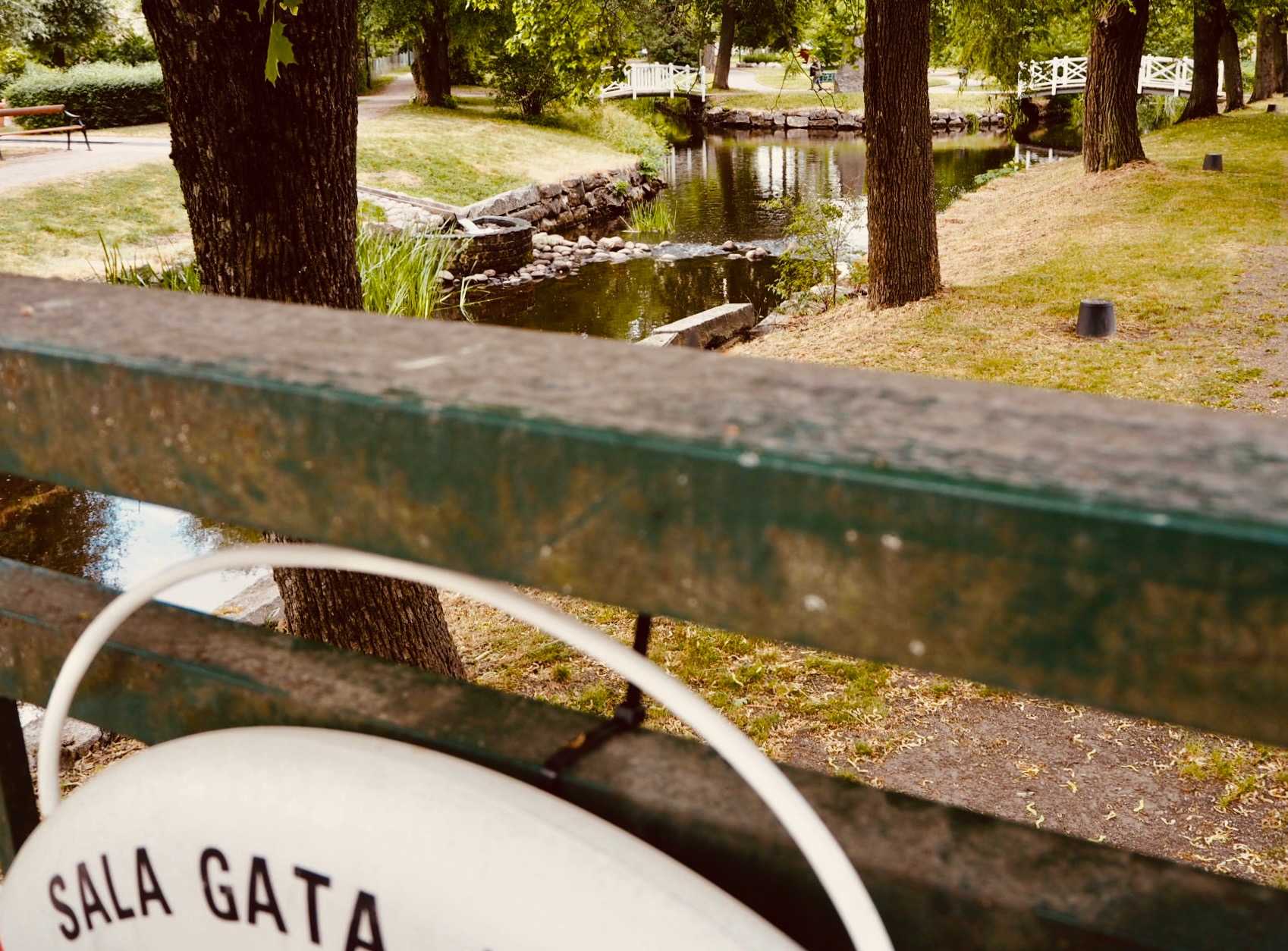
This week has been fun and in a way also intense, since I have revived a lot of memories. I went to Sala in the beginning of this week to talk about my writing. My very first school in Enåker doesn’t exist anymore, but the high school, Kungsängs skolan in Sala, is still in the community. I don’t know why, but in a way it feels good to return to where I am grown up. Strange. But it is also interesting since it probably has something to do with the title of my book “Generationer”. I talked to a friend with whom I went to the same school during many years; both at high school and at the university. The two of us remembered that we had a very inspiring teacher in biology and chemistry in Sala. Encouraging teachers can influence life a lot. I share a photo from this summer from Sala where you can see the beautiful little bridges.
It was a cold and dazzling Tuesday. I really like these kind of days when it is cold and the air is fresh. Days like this, I often listen to Puccini. Opera becomes so clear and sparkling. However, I waited at the railway station in Sala and meanwhile I had a cup of tea. After studying in Sala, everybody but one person continued to study at the university. Most of us went to Uppsala. My class must have been very ambitious. Today, it is more common to work for a year or two, do some traveling and then continue with studies.
I went for a little walk in Uppsala, and I saw my favourite shops. Then I met a friend from Uppsala and we went to a café (www.guntherska.se). Always very nice to go there. It is a privilege to have friends that I have known for so many years. I know about her family and she knows about mine. We also have a common interest in dogs. From what I remember her family had a “lapphund”, called Buffa. Moreover, she recommended a movie I should see, “The Wife”, about a very skilled author, his family life and career. And also a serie on HBO Nordic. Before I continued to Stockholm, we had time to do some shopping. Clothing, but very difficult to find a proper size now since most is sold out. And it felt like old times again. Good.
I tried to think of something that was very typical from when I studied in Uppsala. And, maybe a little boring, but whenever I was going somewhere I always went bicycling. My bike was stolen twice, and the last year in Uppsala I was very happy when I changed to a bike with many gears. Little things in daily life that makes you happy.
Tomorrow will be very interesting day in Sweden. It is a lot of time since the general election was in September, and “talmannen” has had busy days. The main political change is that there is no “Alliansen”. That used to be a right-wing four-party coalition. Two of these parties have now switched to the left parties. So, tomorrow, Stefan Löfven will present his new government. I really hope he will do some changes in his minister posts. To show that there is a change, an improvement to the better. To conclude, it is a big political mess in Sweden right now. It will be interesting to follow the political development.
Since I work at a pharmacy I am daily exposed to viruses and bacteria. Last autumn it seemed like the viruses were a little more aggressiv than usual. In addition, and unfortunately, there was not much vaccin available against the yearly flu. I don’t take this vaccin, but it is good that it is available since some people may be very sensitive to viruses if they have eg a heart- or lung disease.
I remember the H1N1 Flu Virus (Swine Flu) when I was in Norway 2009. That was an extraordinary situation. But also, I was very impressed. A decision was taken by the health authorities that the pharmacies could give patients Tamiflu (antiviral tablets) if certain criteria were fulfilled. It should be noted that a virus cannot be treated by antibiotics. After those intense weeks of work I am extremely careful with washing my hands. I try to remember not have my hands in my face to avoid contamination of viruses. I remember that it was a lot of talk weather it should be classified as a pandemic or not.
However, this winter I have been unlucky. I have had viruses. A virus infection can make the body more prone to be infected by bacteria. That happened to me recently. I really try to avoid to not have antibiotics since antibiotic resistance is one of the biggest threats to global health. But this week I have been on antibiotics. I don’t like it, but I did not have much of a choice. According to me, the discovery of antibiotics is one of the greatest in medical history. In 1928 penicillin, the first true antibiotic, was discovered by Sir Alexander Fleming, Professor of Bacteriology at St. Mary’s Hospital in London.
Currently, antibiotic resistance is often discussed. Sometimes also with regard to biological terrorism, especially delivered as aerosols. Historically, chemical weapons have been used within warfare. In 1710, the Russian army, fighting Swedish forces barricaded in Reval (now Tallin, Estonia) threw plague-infested corpses over the city’s walls. However, today approximately 180 countries throughout the world have signed a Biological Weapon Convention (BWC).
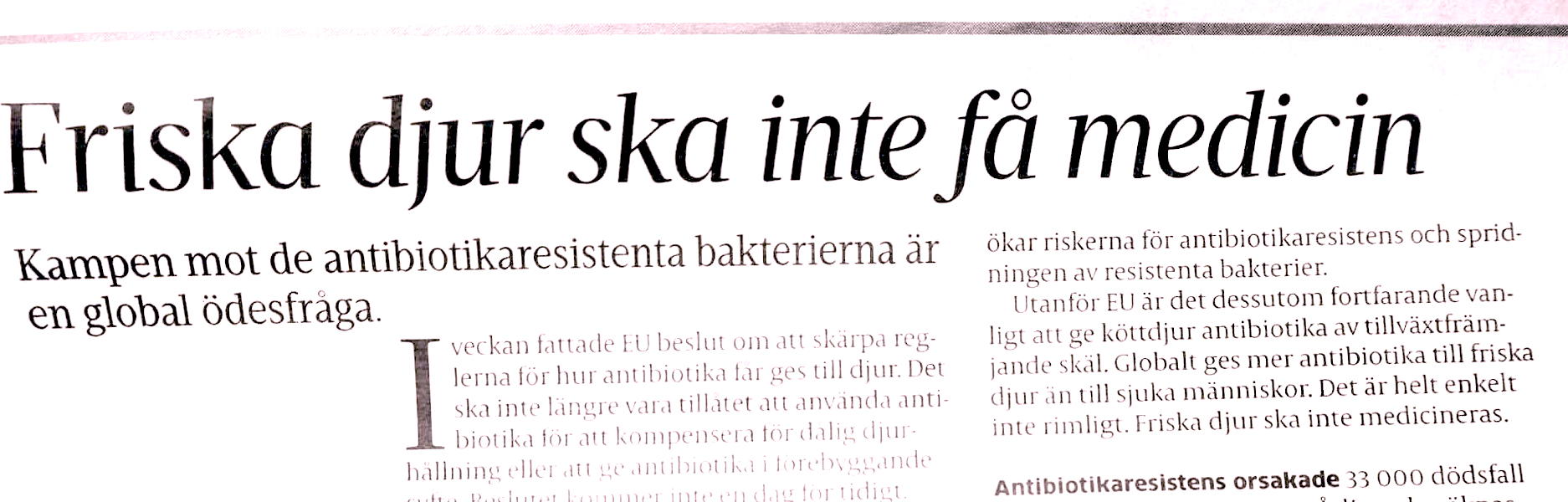
Today, more focus is on the antibiotic resistance. Luckily! And it is right, because it is important, since antibiotic resistance is putting the achievements of modern medicine at risk. Unfortunately, the agriculture sector is contributing to antibiotic resistance. By coincidence, I saw the headline above in Uppsala Nya Tidning “Healthy animals should not be given medicine”. A lot of healthy animals are given antibiotics to have them grow better in food industry. This can be discussed a lot, and if you would like to read more I recommend the World Health Organization and their recommendations.
It is true that it feels like I have had a huge exam. I still need some time to do nothing before I continue to write. I listen a lot to music, make good food, watch entertaining series. Read some. Write here. Meanwhile, I have thought of teaching. Pharmacology. Basic pharmacology. Classical receptor pharmacology. Since I work at a pharmacy, I work daily with teaching. I might not explain the exact pharmacological mechanism for the exerted clinical effect, but at least I explain how to use the medicin in the right way to get the best effect of the drug.
If you use a too low dose you don’t get any effect of the drug. And if you use a to high dosage, significant adverse effects may occur. This is called the therapeutic window. Furthermore, potency is an important term within pharmacology. Potency of a drug is defined as that concentration at which the drug elicits 50 percent of its Emax (E = effect, eg blood pressure). If a drug is potent it means that a very low dose is needed to have a significant clinical effect.
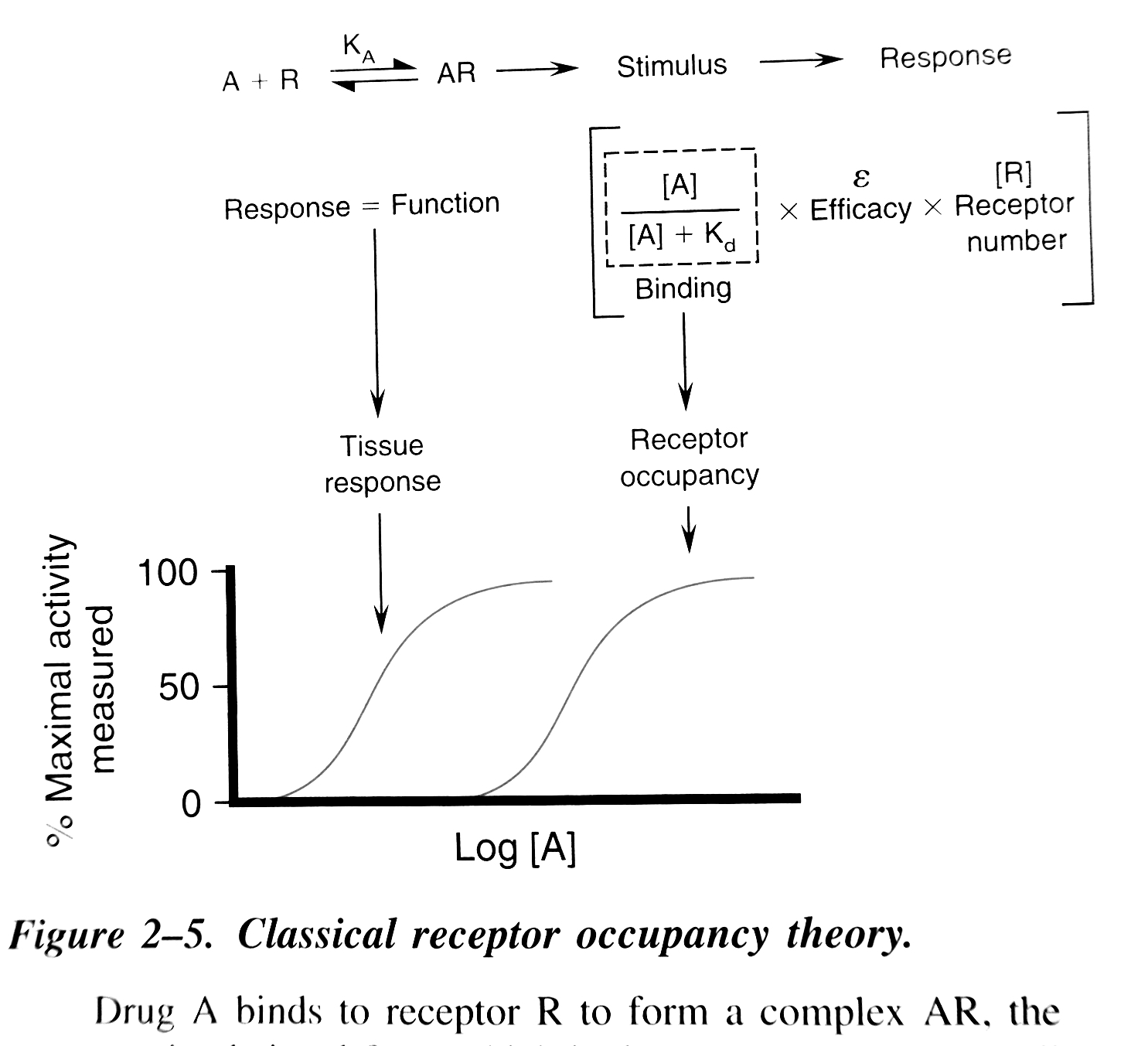
Something that is very important to keep in mind is that biologic variation is very common. That is variation in magnitude of a biological response (eg cognitive function) in a population of patients given the same dose of the drug. This variation depends on eg how the drug binds to the receptor and this is clarified in the illustration above (Goodman & Gilman). You see the drug concentration on the X-axis and the effect of the drug on the Y-axis. The affinity to the receptor is explained by the chemical forces that cause the drug to associate with the receptor, like a hand in a glove. There is always an equilibrium between the drug and the receptor. This can be measured by complex mathematical formulas like the illustration above.
The law of mass action.
Two other important terms within pharmacology are: agonist and antagonist. An agonist stimulates the receptor to exert a specific biological response, and an antagonist block the receptor. Metoprolol is a typical β1-antagonist where pulse and blood pressure are lowered due to blockade of the adrenergic receptors located mainly in the heart.
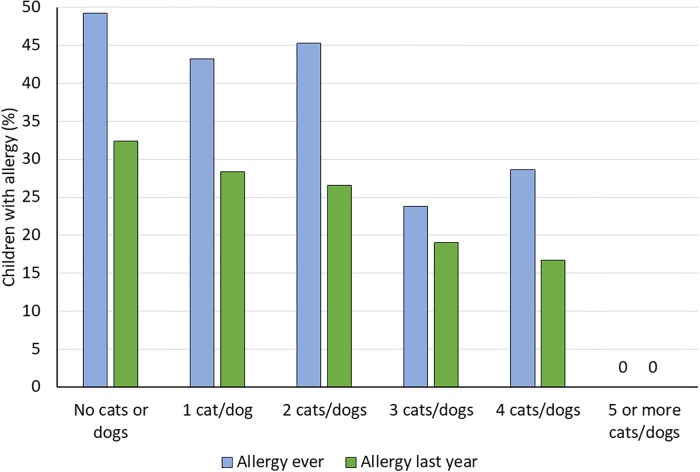
This is a brief theoretical introduction to basic pharmacology. To make it easier to understand, there is an illustration from Hesselmar and co-workers (2018), where they studied if animal allergen in early life can reduce the risk to develop allergy. It seems like dog- and cat exposure can protect against allergic manifestations like asthma. A “mini-pharm” effect that was dose-response dependent. The full study can be downloaded here: